Exoplanet searching around cool stars
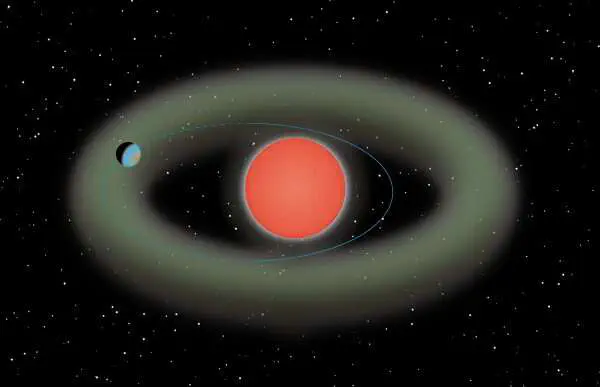 Ross 508 b (Credit by NAOJ)
Short Introduction
Not like solar-like stars, which are hard to detect Earth analogs in the habitable zone (HZ) for their low possibility of transit (<1%, ~1/year) and weak RV signals (~0.1 m/s), cool stars such as mid-to-late M-dwarfs, are promising targets to search for habitable planets because they are much cooler and thus with closer HZ as well as stronger and detectable RV signals (~1-5m/s). In addition, studies on planet occurrence revealed that terrestrial planets are more likely to reside around M dwarfs.
Program
Subaru/IRD is one of the most powerful near-infrared spectrograph mounted on large-aperture telescopes with capability in detecting Earth analogs around cool stars. I am in the project of IRD-SSP (PI: Bun’ei Sato), an exoplanet survey in the framework of the Subaru Strategic Program (SSP), and IRD TESS Intensive Follow-up Project (PI: Norio Narita).

Huanyu Teng 滕环宇
PhD of Earth and Planetary Sciences
I am now working on (1) measuring stellar obliquity of young planetary systems (2) planet searching around evolved stars and Late M dwarfs with radial velocity method.